Buying a home is one of the biggest financial decisions many people make in the United States. For most buyers, paying the entire purchase price in cash is not practical. A mortgage loan makes homeownership possible by allowing a borrower to purchase a property and repay the lender over an agreed period.
However, choosing a mortgage involves more than finding a lender with an attractive interest rate. Buyers must understand down payments, monthly payments, closing costs, credit requirements, loan terms, and the financial risks associated with borrowing.
This guide explains how mortgage loans work in the USA, the different types of mortgages available, how lenders evaluate applicants, and what buyers should consider before signing a loan agreement.
What Is a Mortgage Loan?
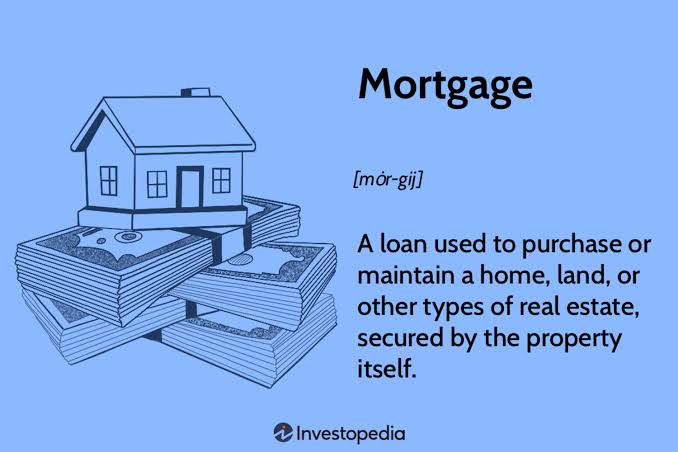
A mortgage is a loan used to purchase or refinance real estate. The borrower agrees to repay the lender according to the loan’s terms, usually through scheduled monthly payments.
The property generally serves as collateral for the loan. If the borrower fails to meet the repayment obligations and the legal requirements for foreclosure are satisfied, the lender may be able to take action against the property.
Mortgage payments commonly include principal and interest. Depending on the loan and property, the monthly housing payment may also include property taxes, homeowners insurance, mortgage insurance, and homeowners association fees.
For example, imagine someone purchases a home for $350,000 and makes a $70,000 down payment. The remaining $280,000 may be financed through a mortgage, subject to lender approval and the terms of the transaction.
The actual monthly payment depends on the interest rate, loan term, and other expenses.
Common Types of Mortgage Loans in the USA
Mortgage products have different eligibility requirements, costs, and benefits. Understanding the main options can help buyers identify loans worth comparing.
- Conventional Mortgage Loans
Conventional mortgages are not insured or guaranteed by the federal government. Many conforming conventional loans meet standards that allow them to be purchased or guaranteed through Fannie Mae or Freddie Mac programs.
Eligibility depends on factors such as credit history, income, debt, assets, down payment, and property details.
Some conventional mortgages allow down payments below 20%. However, borrowers who put down less than 20% may need private mortgage insurance, depending on the loan structure.
Conventional financing may be suitable for buyers who meet the lender’s qualification requirements and want to compare a broad range of loan terms.
- FHA Loans
Federal Housing Administration loans are mortgages made by approved lenders and insured by the FHA.
These loans may provide an option for eligible borrowers who need more flexible qualification criteria. Down payment requirements and credit standards depend on the program and the applicant’s circumstances.
FHA loans include mortgage insurance requirements, which affect the total cost of borrowing.
Review official program information at:
https://www.hud.gov/helping-americans/fha
- VA Loans
VA-backed home loans are available to eligible veterans, service members, and certain surviving spouses who meet program requirements.
Depending on eligibility and the transaction, these loans may offer benefits such as no required down payment and no monthly mortgage insurance. Other fees and closing costs may still apply.
Borrowers should confirm their eligibility, funding fee requirements, and lender terms before proceeding.
Official resource:
https://www.va.gov/housing-assistance/home-loans/
- USDA Loans
Certain USDA Rural Development loan programs help eligible applicants purchase qualifying homes in eligible rural areas.
Eligibility may depend on household income, property location, occupancy requirements, and other program conditions.
Some eligible borrowers may qualify for financing with no down payment, but program fees and other expenses may apply.
Learn more at:
https://www.rd.usda.gov/programs-services/single-family-housing-programs
- Jumbo Loans
A jumbo mortgage exceeds the applicable conforming loan limit for the relevant property and location.
Because these loans fall outside standard conforming loan limits, lenders may apply different underwriting requirements, reserve requirements, and pricing.
The exact requirements depend on the lender, the loan amount, the property, and the borrower’s financial profile.
Fixed-Rate vs. Adjustable-Rate Mortgages
One of the most important mortgage decisions is whether to choose a fixed interest rate or an adjustable interest rate.
Fixed-Rate Mortgage
A fixed-rate mortgage keeps its interest rate unchanged throughout the agreed loan term.
For example, if you take out a fixed-rate mortgage at a particular interest rate, the principal-and-interest portion of the monthly payment generally remains the same over the loan term.
Property taxes, homeowners insurance, and other housing expenses may still change.
Fixed-rate mortgages can help borrowers plan their budgets because the interest rate does not fluctuate with market conditions.
Adjustable-Rate Mortgage (ARM)
An adjustable-rate mortgage typically begins with an initial interest rate that may remain fixed for a specified period. After that period, the rate can change according to the loan agreement and an identified financial index, plus the lender’s margin.
An ARM may initially offer a lower rate than some fixed-rate alternatives, but this is not guaranteed.
If the rate increases after the initial period, the monthly payment may rise. Borrowers should understand the adjustment schedule, rate caps, index, margin, and maximum possible payment before choosing an ARM.
A loan should be affordable under realistic future scenarios, not just at its initial payment.
Understanding Mortgage Interest Rates
Mortgage interest is the cost of borrowing money to purchase a home.
Rates can vary depending on the lender, loan type, loan term, credit profile, down payment, market conditions, and other factors.
A rate advertised online may not be the rate offered to every applicant. Some advertisements assume particular credit scores, loan amounts, down payments, or discount points.
When comparing offers, check the Annual Percentage Rate (APR) as well as the interest rate. APR incorporates the interest rate and certain loan costs, providing a broader measure of borrowing cost. It does not necessarily include every expense associated with homeownership.
You should also compare the loan term, discount points, lender fees, and whether the quoted rate is locked.
For current consumer guidance, visit:
https://www.consumerfinance.gov/owning-a-home/
How Much Down Payment Do You Need?
A down payment is the amount of the home’s purchase price that you pay upfront rather than finance through the mortgage.
For example, on a $300,000 home:
- A 5% down payment equals $15,000.
- A 10% down payment equals $30,000.
- A 20% down payment equals $60,000.
These examples show how the down payment changes the amount financed. They do not represent the minimum required for every loan.
A larger down payment generally reduces the loan amount and may reduce monthly principal-and-interest payments. Depending on the loan, it may also reduce mortgage insurance costs.
However, buyers should avoid using all their available savings for the down payment. Moving expenses, repairs, closing costs, and emergency savings are also important.
The right down payment depends on the loan program, eligibility, cash reserves, and the buyer’s financial circumstances.
What Is the Difference Between Principal and Interest?
Mortgage principal is the amount borrowed that remains to be repaid.
Interest is the cost charged by the lender for providing the loan.
In a typical fully amortizing mortgage, each scheduled payment covers interest and repays some principal. Early in the loan, a larger share of the payment often goes toward interest. As the outstanding balance decreases, more of the payment generally goes toward principal.
Consider a hypothetical $250,000 mortgage with a fixed 6.5% annual interest rate and a 30-year term.
The estimated monthly principal-and-interest payment would be approximately $1,580, assuming standard monthly amortization and no additional loan charges.
This is an illustration, not a current rate quote. It excludes property taxes, homeowners insurance, mortgage insurance, and other housing expenses.
Use a mortgage calculator to estimate payments under different assumptions before deciding how much you can afford.
Understanding Closing Costs
Closing costs are expenses associated with finalizing a mortgage and transferring ownership of a property.
Depending on the transaction, they may include:
- Loan origination charges.
- Appraisal fees.
- Credit report fees.
- Title services and title insurance.
- Recording fees.
- Prepaid property taxes and homeowners insurance.
- Other required settlement expenses.
Closing costs vary by location, lender, property, and transaction structure. They are separate from the down payment.
Some buyers may be able to negotiate certain charges or receive permitted seller contributions, depending on the loan program and transaction terms.
Before closing, review the Loan Estimate and Closing Disclosure carefully. These documents help borrowers understand and compare loan costs.
Official resource:
https://www.consumerfinance.gov/owning-a-home/loan-estimate/
How Lenders Evaluate Mortgage Applications
Mortgage lenders evaluate whether an applicant is likely to repay the loan under its terms.
Credit History and Credit Scores
Lenders may review credit reports and scores to evaluate repayment history and credit risk.
A stronger credit profile can improve eligibility or pricing in some circumstances, but requirements vary by lender and loan program.
Before applying, review your credit reports for incorrect information and address any errors through the appropriate dispute process.
Income and Employment
Lenders generally assess income and employment information to determine whether mortgage payments are affordable.
Depending on the applicant’s circumstances, lenders may request pay statements, tax returns, bank statements, or other documentation.
Self-employed applicants may need additional documentation to establish qualifying income.
Debt-to-Income Ratio
The debt-to-income ratio, often called DTI, compares monthly debt obligations with gross monthly income.
For example, if gross monthly income is $6,000 and qualifying monthly debt payments total $2,100, the DTI ratio is 35%.
Lenders use DTI alongside other factors. There is no single ratio that guarantees approval for every mortgage.
Savings and Financial Reserves
Lenders may examine available funds for the down payment, closing costs, and any required reserves.
Maintaining emergency savings after closing can also help homeowners manage unexpected repairs, temporary income disruptions, and changes in household expenses.
How to Compare Mortgage Offers
Getting quotes from multiple lenders can help you understand the range of available options.
When comparing offers, review the following:
Interest rate: Compare the quoted rate and the assumptions behind it.
APR: Examine the broader borrowing-cost measure and understand what it includes.
Loan term: Compare monthly payments and the total interest expected over the loan term.
Closing costs: Review lender fees, third-party charges, and prepaid expenses.
Mortgage insurance: Determine whether it is required, how much it costs, and when it may end.
Rate lock: Understand how long the rate is locked and whether any fees or conditions apply.
Prepayment terms: Check whether any restrictions or charges apply to early repayment.
Request comparable Loan Estimates from lenders for the same loan type, amount, and terms wherever possible. This makes the comparison more meaningful.
Common Mortgage Mistakes to Avoid
Borrowing More Than You Can Afford
Just because a lender approves a certain loan amount does not mean that amount fits your household budget.
Consider utilities, maintenance, repairs, property taxes, insurance, transportation, savings, and other regular expenses before deciding how much to borrow.
Ignoring Additional Housing Expenses
Mortgage principal and interest are only part of the cost of owning a home.
Property taxes, insurance, maintenance, homeowners association fees, and potential special assessments may increase the overall cost.
Comparing Only the Interest Rate
A lower interest rate does not automatically mean the least expensive mortgage. Fees, discount points, mortgage insurance, and loan terms can affect the total cost.
Making Major Financial Changes Before Closing
Taking on new debt, making large unexplained deposits, or changing employment may affect the lender’s assessment.
Discuss significant financial changes with your lender before taking action during the mortgage process.
Skipping the Loan Documents
Read the Loan Estimate, Closing Disclosure, and other loan documents carefully. Ask the lender to explain any charge or condition you do not understand.
Frequently Asked Questions
- What credit score do I need to buy a house in the USA?
There is no universal credit score requirement for every mortgage. Minimum requirements depend on the loan program, lender, down payment, and the applicant’s overall financial profile.
- Can I buy a house without a 20% down payment?
Yes. Some mortgage programs allow eligible borrowers to make smaller down payments. However, mortgage insurance or other costs may apply, depending on the loan.
- Is a fixed-rate mortgage better than an adjustable-rate mortgage?
Neither option is best for everyone. Fixed-rate mortgages provide a stable interest rate, while adjustable-rate mortgages may change after an initial period. Compare long-term affordability and the risk of future payment increases.
- What is included in a monthly mortgage payment?
The principal-and-interest payment covers repayment of the loan and interest. The total monthly housing payment may also include property taxes, homeowners insurance, mortgage insurance, and applicable association fees.
- How can I reduce my mortgage costs?
You can compare lenders, review fees, consider the effect of a larger down payment, improve your financial profile, and evaluate different loan terms. Consider both the upfront costs and the long-term cost of borrowing.
- What is mortgage preapproval?
Mortgage preapproval is a preliminary assessment by a lender based on information about your finances and credit. It can help you understand a potential borrowing range, but it is not a guaranteed final loan approval.
- Where can I find reliable mortgage information?
The Consumer Financial Protection Bureau provides educational resources about mortgage shopping, loan documents, closing costs, and homeownership. Visit https://www.consumerfinance.gov/owning-a-home/.
Final Thoughts
A mortgage can help make homeownership possible, but selecting the right loan requires careful comparison and realistic budgeting.
Understand the different mortgage types, compare fixed and adjustable rates, calculate your down payment, review closing costs, and examine the complete terms of each offer.
Do not focus only on the amount a lender is willing to approve. Choose a payment that leaves room for everyday expenses, emergency savings, and the ongoing costs of owning a home.
Taking time to compare lenders and understand your obligations can help you make a more informed home financing decision.
Disclaimer: This article is for general educational and informational purposes only. It does not constitute financial, legal, tax, or mortgage advice. Mortgage rates, fees, eligibility requirements, loan limits, and program rules can change and vary by lender and location. Verify current information with official sources and qualified professionals before making a borrowing decision.
No responses yet